2/04/2009

Arequipa to Cusco

(January 2009)


On our last day in Arequipa we went to the city market. As in markets elsewhere, most vendors were indifferent to my questions (Jim “What do you call the yellow melons?” Vendor “Yellow melons.”), a few were irritated, and a few were interested in talking to us.  One of the latter was a woman selling herbs, freeze-dried potatoes (chuño, right), corn, beans, and so on. She answered all our questions and sold us a bag of ground coca, suitable for mixing in food or drinking in fruit juice. We left it in Peru.                                                
                                                                     
                                                                                                                 
With tropical climates in the lowlands, and temperate climates at higher elevations, Peru has a tremendous variety of fruits and vegetables; and low prices. The “frezas” (strawberries--bottom) were 1.50 soles a kg., $.21 a lb.


The fruit drink sellers.
…and the butchers. There was a surprising (to me) amount of alpaca meat. It is evidently the least expensive meat in Peru, is very low in fat and tastes like beef. There was also pork and jerky; beef was to the right.


Chile armarillo, fresh and dry; and rocotos.


The roots and tubers section. In the center is yucca or manioc (a south American domesticate, the world’s 3rd most important source of carbohydrates). Purple corn, to the right, is made into a pleasant drink, chicha morada. Also note the abundant garlic, and many, many types of potatoes, most at around $.05 lb.; plus, complements of globalization, Friskies cat food.


Leaving the market, we were hungry again.  We started with fresh water shrimp a la parmesana;   
And then A had lomo saltado and I had cui


With music.


Followed by a little shopping. A bought the two dolls the ladies are holding and I took their picture. But then they insisted that A take a picture of me with them; evidently they thought I was cute. The lady on my left was clearly tickled.


-----------------------
The remaining adventure for the day was getting bus tickets to Cusco. The bus goes from Arequipa to Juliaca, then to Puno on Lake Titicaca, back to Juliaca and on to Cusco, 10 to 12 hours, and $25. The bus was deluxe class, with stewardesses serving mate de coca and almuerzo (rice with a chicken wing & warm jello).
Not our bus, but one like it.
(photo credit)


But, almuerzo notwithstanding, it was a great ride. We left Arequipa and rapidly climbed onto the altiplano at between 4,000 and 4,500 meters, 13 to 15,000 feet.
                                                  And saw vicuna along the way.


I was surprised by the contoured surfaces. The lines appeared to have been ditches or perhaps ridges, rather than terraces. Inca? For what purpose?


Juliaca was not a garden spot, tough the moto-taxis seemed like a good idea.


Leaving, we crossed the soggy flats surrounding the lake and continued on to Puno.

Puno, on lake Titicaca is much more picturesque, though we saw it only from the bus window. We arrived at 5:00 pm, after 7 hours, and left again in 30 minutes or so. Like Juliaca, Puno seems to be experiencing lots of immigration from surrounding rural areas. Leaving, we drove another five hours, and arrived at Cusco around 11:00 pm.


2/01/2009

Peruvian Food

(Peru, January 2009, continued)

As you may have noted by now, I was pretty impressed with Peruvian food.

Although I had eaten at Peruvian restaurants, I didn’t know much about Peruvian food other than its reputation as (among) the best in South America and pretty distinct from its neighbors. Ecuadorians, to the north, eat meat and potatoes… and rice, and corn, and plantains.

This photo looks like what Andy’s semester-abroad host family served us in Quito… fried meat and assorted carbohydrates.

And to the south, here in Chile, fresh seafood, simply cooked, and dishes based on corn, beans and tomatoes are typically Chilean; there’s not much complexity and the immigrant influences are mostly Spanish and German: empanadas and küchen.


But Peru [and here I find myself drifting into professor mode] has all the makings of a great cuisine: diverse environments, from the Atacama desert to the Amazon rainforest; an indigenous high culture, which meant that there was a cuisine, and not just food; and extensive immigration from Europe, Asia and Africa, which brought new ingredients and cooking techniques.

The traditional Inca crops included corn, beans, squash, potatoes, peanuts, chilies, sweet potatoes, and avocados; plus lesser known domesticates such as quinoa, a small grain used like rice; oca and ulluco, potato-like tubers; and many herbs and fruits found in Peruvian markets, if nowhere else.


And they had meat: llamas, alpacas, guinea pigs and ducks.


The arrival of the conquistadores brought little culinary sophistication, but they did bring pigs, cows, sheep, chickens, and wheat, plus the essential onions, garlic and cilantro. Africans, Italians, Chinese and Japanese brought more, all now incorporated into classic Peruvian dishes.


The characteristic ingredients of the Peruvian cuisine are potatoes, in many varieties, sizes and shapes;


…aji amarillo (yellow chile pepper, center) and another chile, the rocoto (upper right); tomatoes, red onions; cilantro
...the herb huacatay (left in photo); queso fresco (farmer’s cheese); peanuts; and evaporated milk(!);

These go into a lot of dishes, but among the most common on restaurant menus are:


Ceviche 
Raw fish, usually corvina, lightly marinated in lime juice with a touch of garlic, ginger and chile; and tossed with red onion, cilantro and parsley. Served with slices of sweet potato and Peruvian corn. All kinds of combinations are possible, using shrimp, octopus (cooked first), squid, clams, etc. We even had and excellent vegetable ceviche. Usually a first course. Delicious, cool and fresh. (There’s another picture in the Arequipa section.)


Papas a La 
Huancaina   


               and Ocopa 


These are cheesy sauces served cool over boiled potatoes. Papas a La Huancaina (potatoes in the stile of the lady from Huancayo) include yellow chiles, evaporated milk, and queso fresco, thickened with cracker crumbs. Ocopa includes these, plus onion, green pepper, huacatay, and ground peanuts, and is thickened with crumbled vanilla wafers (or animal crackers). I have only had papas a la Huancaina, which were rich, cheesy and a little bland. I look forward to ocopa …which I plan to make soon.

Rocoto Relleno

Rocotos are chile peppers, very hot if the seeds are included, but only slightly hot if the seeds and veins are scooped out. In Arequipa, where the dish is famous, they are filled with minced beef, seasoned with garlic, oregano, yellow chiles, and minced peanuts; and topped with hard boiled egg slices and cheese. Rocotos are not likely to be found outside South America.


Lomo Saltado
This Chinese influenced stir-fry of beef, onions, tomatoes and French fries is on the menu of every Peruvian restaurant.


Aji de gallina

And so is aji de gallina, boneless chicken in a cheese and yellow chile sauce similar to that of papas a la Huancaina (also with HB eggs and olives).


Seco de Cordero


Literally “dry of lamb” this fine dish is not dry and may also be made with beef, goat or alpaca. (The name contrasts with agguaditos, “little waters,” dishes which are more soup-like.) The meat is cooked in a sauce of beer, garlic, onions and lots of cilantro. The seco I had in Cusco looked more like the one below: greener is better--if not pretter.


=


Tallarines en salsa verde

Spaghetti in green sauce, Peru’s version of pesto, includes walnuts, spinach and evaporated milk, in addition to the traditional basil and garlic. In restaurants it is often offered with chicken or seafood, like this one that I ate in Mangos restaurant in Lima.
.
And for desert, Suspiros de Limeñas, “sighs of ladies from Lima,” a meringue-topped custard served with a port wine sauce.


Other dishes you may encounter in your neighborhood Peruvian restaurant are fish, steak or chicken ...la chorrillana, meaning topped with a sauté of tomatoes, onions and peppers; arroz con pato, duck with cilantro seasoned rice; chicharoes de calamares fried pieces of squid (or fish or pork): and chupes, chowders of seafood and vegetables.


Cui, guniea pig, will probably not be on US menus.

Recipes for all these things can be found on the web (try http://www.yanuq.com/english/recipesperuvian.asp) or in The Exotic Kitchens of Peru, by Copeland Marks, a cookbook author who does research like an anthropologist. I’ve used his recipes for some of the descriptions (and some photos are from the web).


1/27/2009

Arequipa

(Peru, Jan 2009 continued)


After four days in Lima we flew to Arequipa, Peru’s second largest city, population one million or so. Overland, via bus through Ica and Nazca on “the Gringo Trail,” it’s 16 to 18 hours, so the one-hour, 450 mile (700+ km), $125 round trip (Lima to Arequipa and back to Lima from Cuzco) was not a difficulty decision.


(click on photos to expand)


Arequipa, to our taste, was vastly more pleasant than Lima. In spite of it’s size and population, the old colonial city center is compact and clean. Lima was neither, and muggy to boot, 75-80 F(23-25 C) with high humidity and haze. Arequipa is at an altitude of 7,700 feet (2350 m) and is very dry. While January is in the rainy season, the monthly average is only one inch (actually 28 mm) and while it was often cloudy we had dry weather with highs in the low 70s (low 20s C).


The heart of colonial Arequipa is the Plaza de Armas, surrounded by the cathedral and municipal buildings.


Our hostel, the Casa de Melgar, (found courtesy of Lonely Planet Peru) was in a great old colonial house, previously the home of the Bishop, with a succession of patios stretching back 50 meters or so from the entrance.


This patio was almost directly below our room.


Breakfast in the glassed in dining room included muesli of quinoa* and puffed corn, scrambled eggs with ham, bread, jams, coffee or tea, and coca leaf tea (!?). *Quinoa is a native Peruvian small grain, tasty and high in protein. It can be popped, as in muesli, or cooked like rice. Whole Foods has it; it’s very good.


Coca leaf tea, or mate de coca is served everywhere in the Peruvian highlands. Taken either as tea or chewed, it is effective against altitude sickness. A gets migraines, and was concerned that the high altitudes we were going to experience, up to around 14,750 feet (4,500 m), would give her soroche, altitude sickness. She had been taking a pharmaceutical, but started having side effects, so she stopped it and we relied on mate de coca with breakfast and chewed coca during the day if we felt any symptoms. Neither produced any noticeable high, but coca evidently works: neither of us was sick, though we certainly noticed the altitude climbing the steep streets in Cusco.
The major tourist site in Arequipa is the Santa Catalina Monastery, a city-block sized complex of buildings begun in 1580 and only opened to the public in 1970. The nuns, who had to be “Spanish” (not mestizo) came from wealthy families who could pay the substantial dowry required for entry.

The convent is a maize of buildings, courtyards, gardens and narrow alleys....


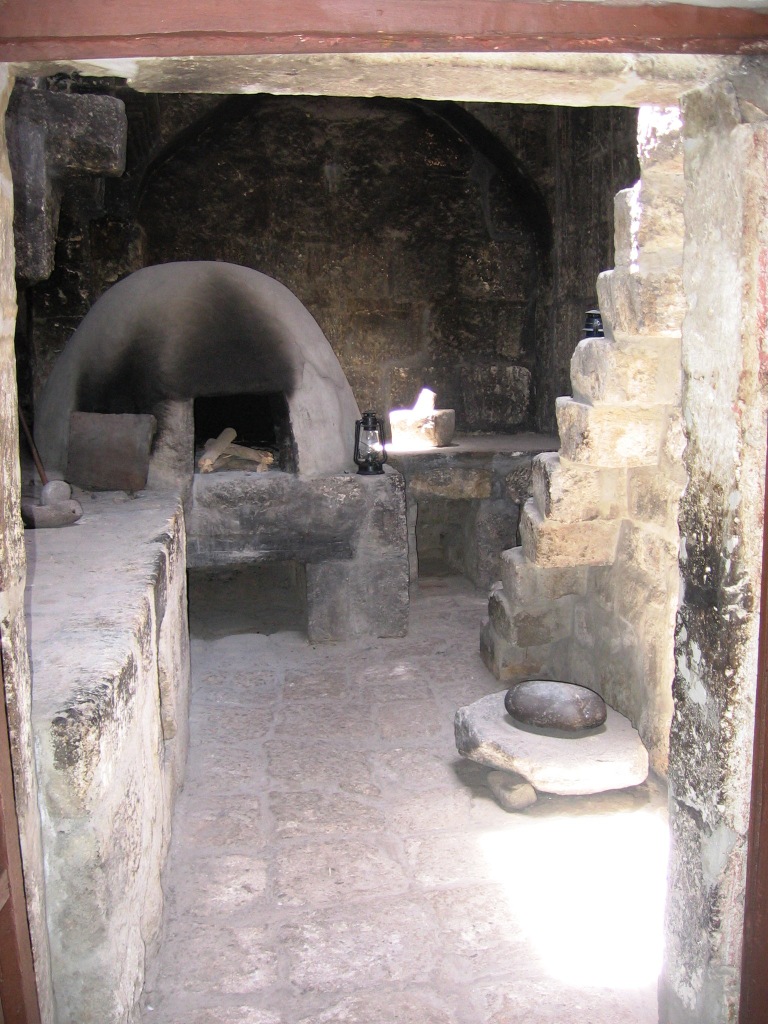
When I noticed that the kitchens had indigenous flat grinding stones rather than European style querns I first began to suspect that the nuns were not doing the chores.


The laundry.


The nuns brought their household furnishings and personal women servants, who evidently were thus interred for life, and lived a life of luxury; though museum displays of barbed wire underwear and other items for bodily mortification suggest that all not was not fun and games.


In the 1870s the monastery was reformed, servants and slaves were eliminated or reduced in number, and its wealth was transferred to the Vatican. Twenty to 40 nuns (depending on what you read) still occupy the monastery.

Neither Alejandra, who is a practicing Catholic, nor I was uplifted by this 450 year history of exploitation, luxury, slavery and piety, though the monastery itself is beautiful.

But on a more positive note, the adjoining Trattoria de Monasterio has great food! We started with pisco sours and a very interesting complementary tidbit of three inch flour tortillas with a picadillo of minced vegetables to put on top. Then we shared this ceviche de verduras, (right) followed by osso buco with a ricotto relleno.


(to be continued; Peruvian food is next....)

Peru - January 2009 - Lima

Lima


I suspect you may recognize this photo… it’s the obligatory shot from the hut of the guardian at Machu Picchu, taken the next to last day of our trip.


We started out in Lima on January 8, after flying in from Santiago, 1500 miles to the south west. With population of 8.5 million spread over 300 square miles Lima has a bit of everything, but like most tourists we spent our time in two areas; the historic center and the up-scale neighborhoods of San Isidro and Miraflores near the coast south of downtown.


Driving across Lima from the airport it was clear that we were in the third world. While Santiago feels much like the US or Europe, Lima reminds me of Mexico City in the 70s: mostly gritty, crowded, and dirty. While not poor by international standard
s (Peru’s per capital GDP is near the world’s median at $8,500), it was pretty obvious that folks were just getting by. Alejandra was struck that many buildings were half finished; inhabited but unpainted and with reinforcing bars sticking out of the roofs; evidently waiting for money to build the next floor. The photo, taken from the national museum shows a fairly typical urban scene of working class neighborhoods.


The center of historic Lima is the Plaza de Armas with the Cathedral on one side (right) and the national palace (left) on the other.


The plaza was full of Peruvian and international sightseers, plus dozens of assorted touts, beggars and vendors, especially at noon when the ornately uniformed guard changes, though since everything occurred behind bars and a line of riot police it was a little difficult to appreciate.


Lonely Planet Peru made us conscious of the bag snatchers and pick pockets, as well as the general crime rate so we were a bit leery of large crowds, but we had no problems; other than escaping from aggressive vendors. We eventually learned that the only way to avoid a five minute hard sell is to completely ignore them. The slightest show of interest or curiosity and they will stay with you indefinitely.


On the third side is the Palacio de la Municipalidad with the Union Club on the first floor, sight of a great mid-day buffet of classic Peruvian dishes.


East of the Plaza de Armas is the central market and Barrio Chino. Peru’s Chinese population is very visible, Chinese restaurants or chifas are very popular and Chinese influenced Peruvian food like lomo slatado (beef-tomato stir fry) and chufa (fried rice) are served everywhere. The largest supermarket chain is Wongs.

Our B&B ( left) was several miles from the city center in the San Isidro neighborhood; the up-scale home of golf clubs (below right) restaurants, hotels and the city’s wealthy, as well as the Japanese embassy, site of the 1996 hostage crisis.


It also has very classy supermarkets. Like the shirt?


Lima’s classiest mall, the ocean-side Larcomar is in nearby Miraflores. We had a very good meal there, though the $7 glass of white wine was a surprise. I eventually learned to stick to pisco sours and beer while in Peru.


Otherwise, restaurants were very reasonable, with two or three course meals with drinks running from $15 to $45.


Here, at the Punta Sal restaurant in San Isidro, we started with pisco sours; followed by a shared ceviche of corvina, the classic Peruvian dish. Alejandra’s main course was a shrimp pasta; mine was a pasta with a creamy sauce of Peruvian yellow chiles topped by fried squid.

Ceviche


Punta Sal’s wine was more reasonable.


The ocean front in the Miraflores area is a broad park reaching to the edge of the cliffs, though the beach itself is not particularly attractive.

…continued  here.